
Is your cleaning cupboard full of plastic?
Worried about what's lurking under your kitchen sink? So were we!
Between the hundred spray bottles, the brightly coloured sponges and the scrubbers that fall apart in a week, our cleaning cupboard was one of the most plastic-heavy spots in the house.
The good news? It's also one of the easiest places to make a change. Here's why we switched to non-toxic, plastic-free cleaning, and why we think it's worth a go.
What’s the harm?
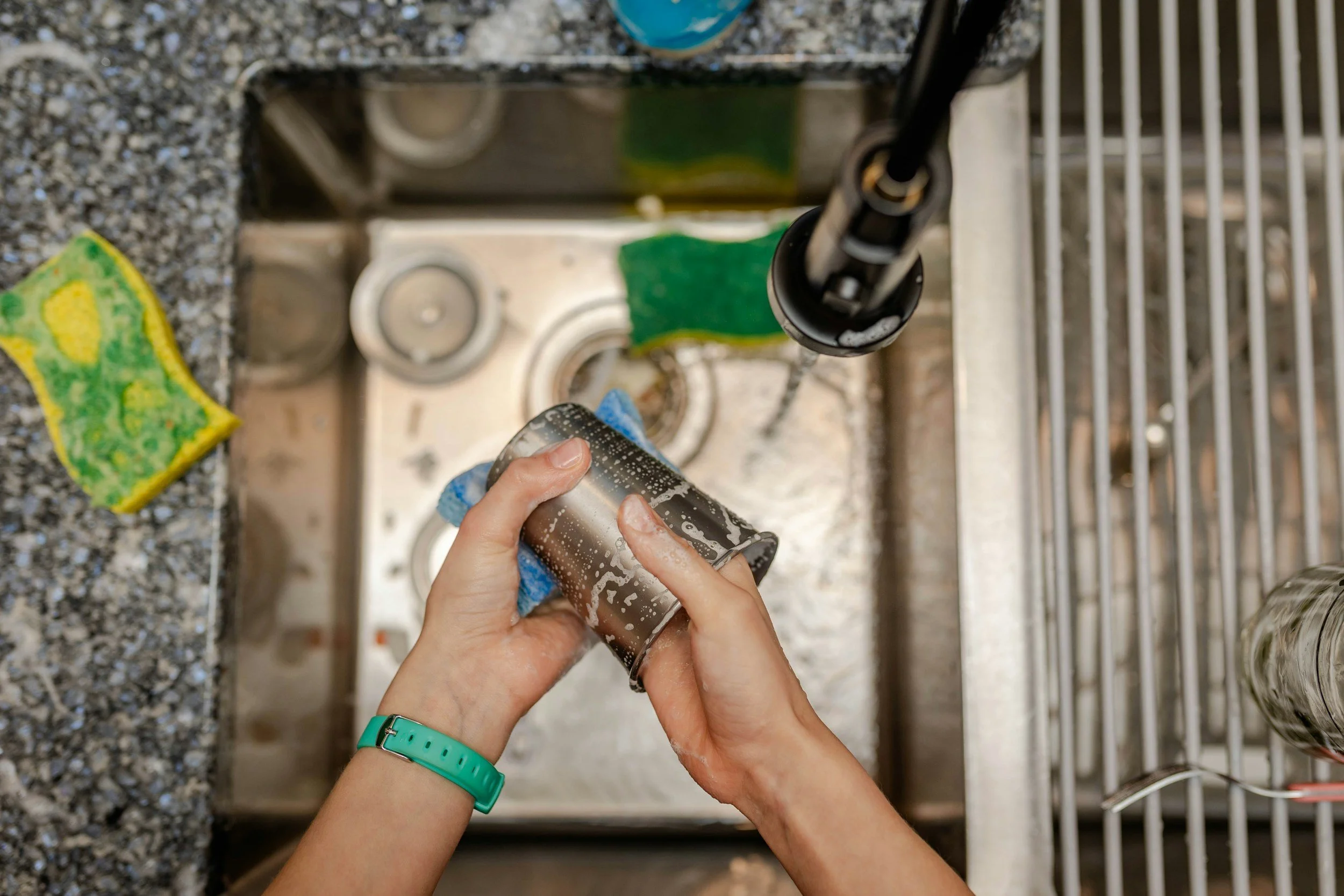
Most supermarket cleaning products come in plastic bottles, and a lot of what we wash up with is plastic too: synthetic sponges, scourers, dish brushes and microfibre cloths. Every time we scrub, those items slowly wear down and shed tiny plastic particles that head straight down the drain.
It's not just sponges, either. Did you know? University of Queensland researchers found that washing plastic containers and utensils in the dishwasher releases micro- and nanoplastic particles into the wastewater, and older or damaged containers shed even more.
None of this means you need to panic or throw everything out. It just means the things we clean with are worth a second look.
Health benefits
Ever finished cleaning the bathroom with a headache? You're not alone.
A University of Melbourne study found that one in three Australians (33%) report health problems, such as migraines, asthma attacks, breathing difficulties and skin rashes, when they're exposed to fragranced products like cleaning sprays, laundry products and air fresheners.
Part of the problem is that cleaning product labels in Australia don't have to list every ingredient, or even say whether a fragrance has been added. So it's hard to know what you're actually breathing in.
Switching to simple, fragrance-free cleaners (or good old vinegar, bicarb soda and a bar of dish soap) means fewer mystery chemicals floating around at home.
If you want to fully remove the scents that are added in, one thing we learnt along the way: "natural" on the label doesn't always mean fragrance-free, so it's worth checking for added scents too.
Environmental advantages
Plastic that goes down the drain or into the bin doesn't just disappear. According to Clean Up Australia's FY23 Litter Report, plastics made up 81% of the rubbish volunteers collected around the country, with soft plastic pieces the most common item found.
Swapping to refillable cleaners, bar soaps and plastic-free washing-up tools, like wooden dish brushes, natural loofahs and cellulose cloths, means less plastic in your bin, fewer bottles to deal with and fewer tiny particles washing out to our rivers and beaches.
Even better, many of these swaps can go in the compost when they wear out, instead of landfill.
Not sure where to start?
You don't need to swap everything at once!
Next time your sponge or spray bottle runs out, replace just that one thing.
Small swaps really do add up, and we'll be here sharing what's worked for us along the way.
Recommended products…
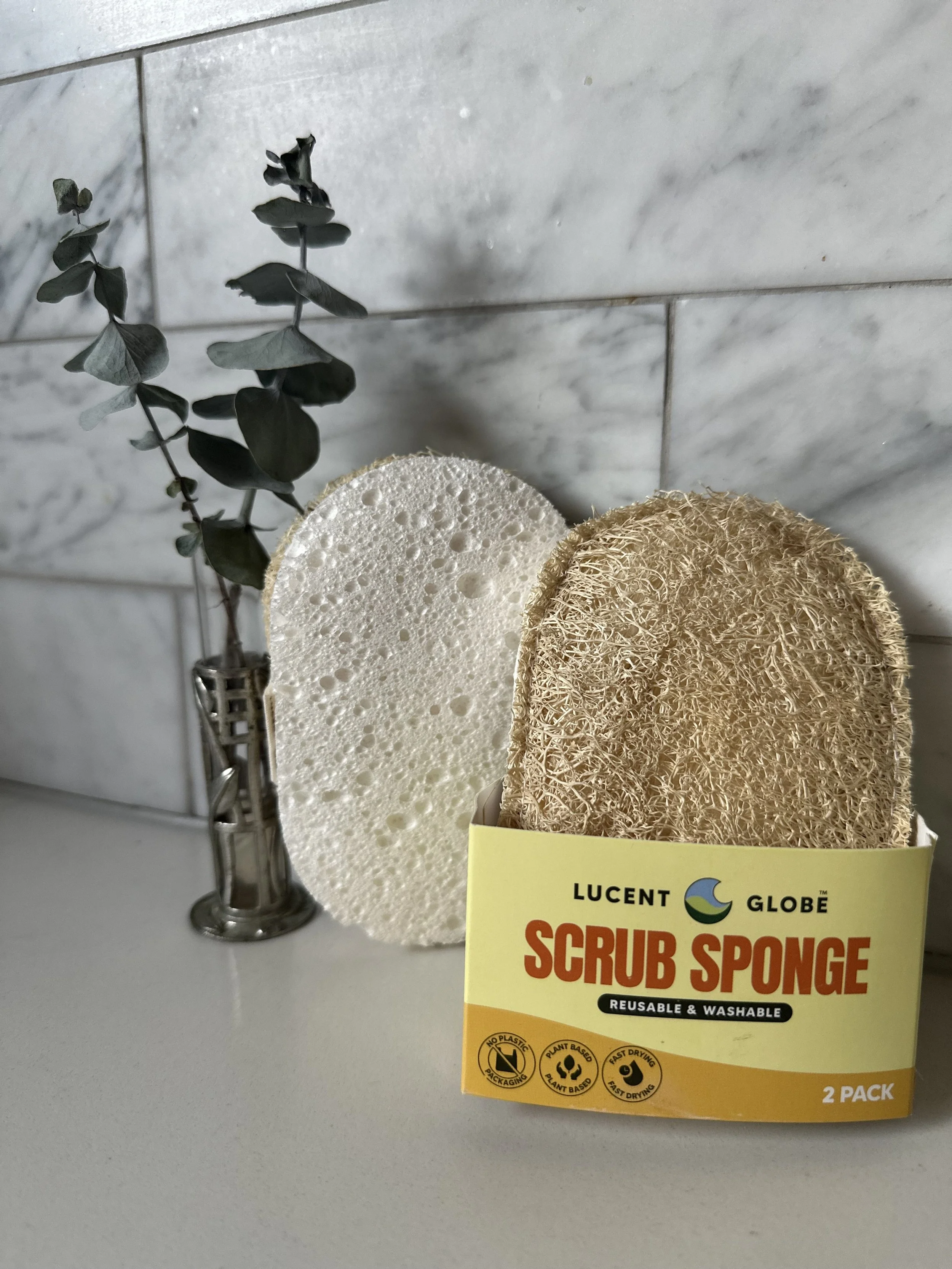
Natural Scrub Sponge/Scourer by Lucent Globe
Could not praise these sponges high enough, they are natural and work so effectively.
Got a two pack, but we are still on our first sponge after 6 months of use. They just don’t fall apart. And they don’t smell either! The scrub side is perfect for our saucepans and the sponge side is good for dishes, mugs, glasses etc.
We rinse and wring them out and leave to dry on the draining board, and that seems to be enough to prolong their life.
We also bought their washing machine sheets and loved them too. Great to buy from Australian business.
You can purchase direct from their website or they have a shop front on Amazon.
Koala Eco refillable cleaning products
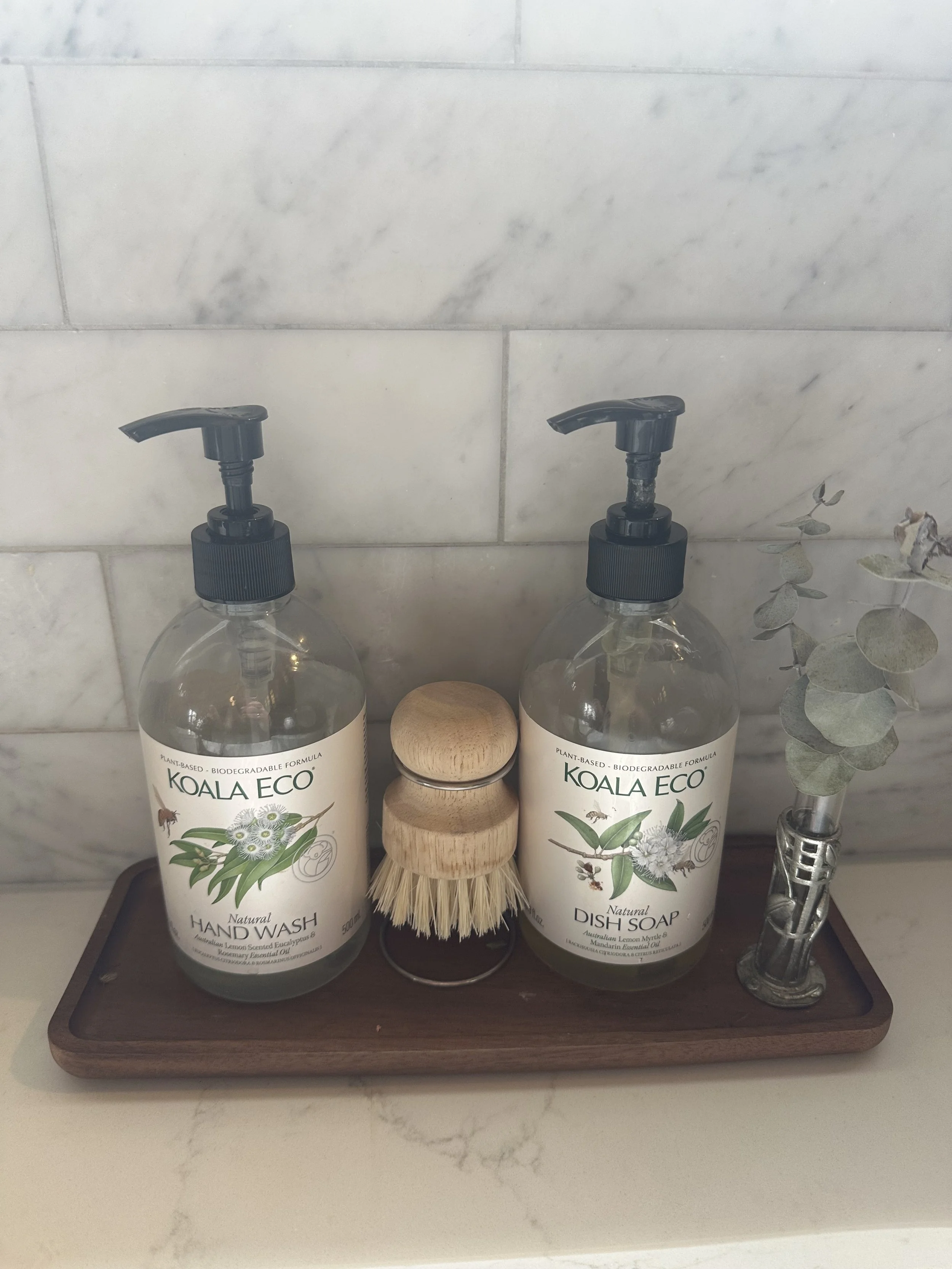
We made the swap to their range of products, starting in a sale a few years ago. We bought two products and got a third full size one to try for free.
I used up all my other cleaning products first, which actually removed seven different types of sprays to just one, and three glass cleaners to one, plus their dishwashing liquid has a giant refill which lasts for ages.
So now our under sink cupboard is a lot more empty!
Our favourite product is their kitchen cleaner spray and their dish soap, with both having large refill bottles available. The dish soap has Australian lemon myrtle and mandarin essential oils, and is very effective at cutting through grease.
Everything they make is biodegradable, plant-based, never tested on animals, grey water safe and septic safe. They don't use palm oil, dyes, masking agents, synthetic perfumes, chlorine, bleach, sodium laurel sulphates and phosphates. Another Australian business we love.
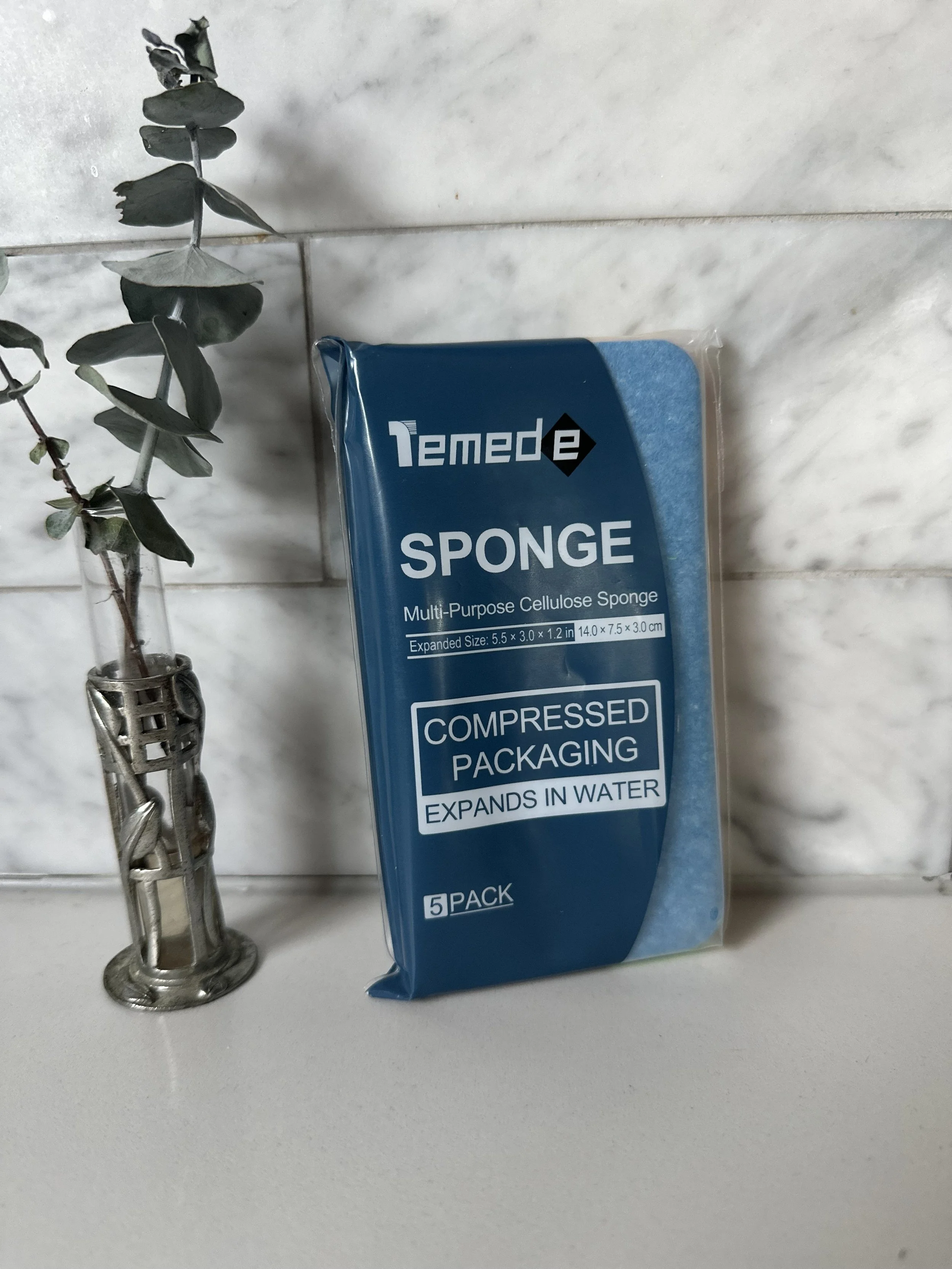
Temede natural expanding cellulose sponges
These sponges are great quality and value. We are only on our second sponge after 7 months of use. They come in very small packaging and then you drop them into water to expand them when ready to use. Another way to keep your cleaning cupboard small!
The sponges are made from plant materials, allowing for quick drying and preventing any unpleasant smells associated with traditional kitchen sponges
They can be used without scratching dishes, plates, or cups. It can even be used on hard-to-scratch surfaces such as windows, non-stick pans, and expensive glassware without leaving any marks.
We got the 5* pack of sponges (including 2 yellow, 1 green, 1 pink, 1 blue. They use compressed packaging, saving space and resources, which we loved.
Disclaimer: As an Amazon Associate, we earn from qualifying purchases.
To help us with the cost of setting up and running this website, we are adding direct purchase links to recommended products.
Then we may take a small commission from the businesses, if you choose to buy from them. Thanks for your support!
Our sources
We want to be transparent about where our facts and data have come from. In a world of ‘fake news’ and AI, its good to be clear about information, so that you can trust it.
University of Queensland, "Dishwashing a source of microplastic pollution", UQ News, 20 May 2025: https://news.uq.edu.au/2025-05-20-dishwashing-source-microplastic-pollution
University of Melbourne, "One in three Australians report health problems from fragranced consumer products", Newsroom, March 2017: https://www.unimelb.edu.au/newsroom/news/2017/march/one-in-three-australians-report-health-problems-from-fragranced-consumer-products
Steinemann, A. (2017), "Health and societal effects from exposure to fragranced consumer products", Preventive Medicine Reports: https://pmc.ncbi.nlm.nih.gov/articles/PMC5122698
Sustainability Matters, "Plastics dominate Australian litter landscape" (reporting Clean Up Australia's FY23 Litter Report): https://www.sustainabilitymatters.net.au/content/waste/news/plastics-dominate-australian-litter-landscape-695261358