
Why every Aussie coffee lover needs a reusable cup
Australia runs on coffee. But behind every flat white and long black is a mounting waste crisis that most of us pour away without a second thought. Here's what's really happening — and what one simple swap can do about it.
Australians are among the most passionate coffee drinkers in the world. Coffee isn't just a morning habit here — it's a cultural institution, particularly in Melbourne, which has built a global reputation as one of the most serious coffee cities on the planet.
But our love affair with coffee has a dark side. The vast majority of Australians still drink their takeaway coffee in a single-use disposable cup — and those cups, used for just a few minutes, are generating one of the country's most significant single-use plastic waste problems.
The solution is refreshingly simple: a reusable coffee cup. It pays for itself within weeks, cuts your carbon footprint significantly, often saves you money at the café counter, and keeps plastic out of our waterways and oceans.
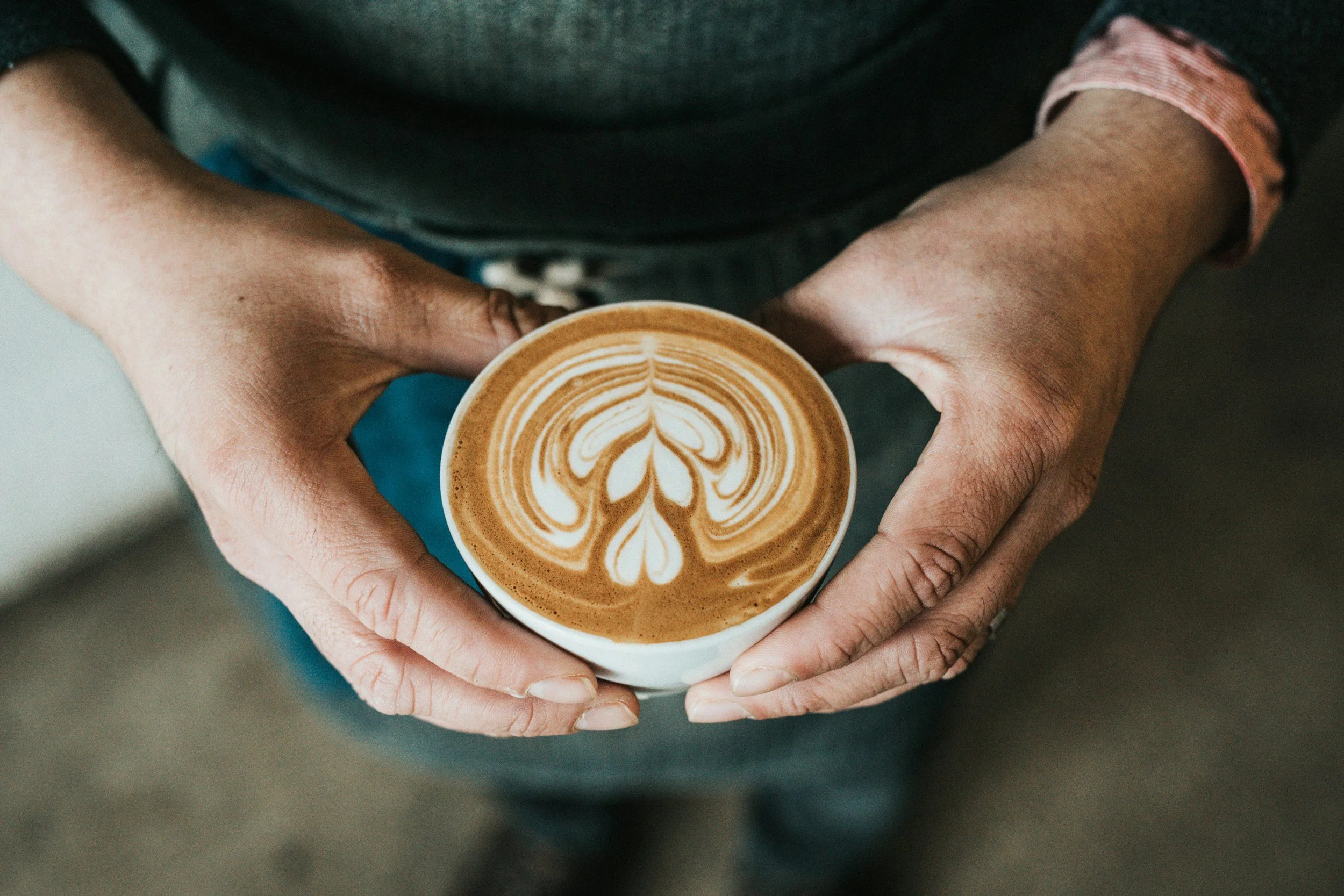
Many cafés now offer "compostable" or "biodegradable" cups, which is awesome. But, most compostable cups can only break down properly in industrial composting facilities — and only 1 in 400 compostable cups actually makes it to such a facility in Australia.
The plastic lining of disposable coffee cups doesn't just create a recycling problem. When hot liquid is poured into a disposable cup, the heat causes the plastic lining to shed microplastic particles directly into your drink. Research has confirmed that a standard takeaway coffee cup can release tens of thousands of microplastic particles into hot beverages.
If thats enough reason to make you want to swap them out, the production of single-use paper cups requires enormous quantities of trees and water.
Estimates suggest more than 20 million trees are cut down every year to produce single-use paper cups globally, with Australia contributing significantly to that demand. It also takes approximately 3 million litres of fresh drinking water just to produce Australia's daily single-use cup consumption.
Our love of coffee explained
Having both lived in Melbourne for many years before moving to Geelong, we know that Melbourne has long held the title of Australia's coffee capital.
The city's coffee culture dates back to the mid-20th century, when European immigrants — particularly Italian and Greek communities — brought their espresso traditions to Melbourne's streets and laneways. What emerged was something uniquely Australian: a coffee scene defined not by chains, but by independent cafés obsessing over craft, quality, and the relationship between barista and customer.
That tradition continues today. Australians are drinking coffee at remarkable rates, the cultural stakes couldn't be higher. Coffee is not going anywhere. Can we change our daily habit, unlikely, but can we swap out what we drink it in? Let’s hope so.
Whats the harm?
Australians dispose of an estimated 1.5 to 2 billion single-use coffee cups every year — making them one of the most consumed single-use plastic items in the country.
That works out to roughly 2.7 million cups thrown away every single day, or more than 50,000 cups every 30 minutes.
According to the Australian Plastics Flows and Fates Study, the average Australian produces 62.2 waste coffee cups annually. Hot and cold cups — including their lids — are the second most consumed type of single-use plastic waste in the country, just behind expanded polystyrene food trays.
Clean Up Australia estimates 1.84 billion single-use cups are used by Australians every year. Sustainability Victoria notes the coffee cups and lids used annually in Victoria alone could fill 203 Melbourne trams.
Most Australians assume their takeaway coffee cup can go in the recycling bin. It cannot. Disposable coffee cups have a thin plastic lining on the inside — this is what prevents the coffee from soaking through. But that plastic lining also makes the cup almost impossible to recycle through standard kerbside recycling, because separating the paper from the plastic during processing is technically difficult and economically unviable.
The result is that less than 1% of disposable coffee cups are properly recycled in Australia. The overwhelming majority — around 90% — go straight to landfill.
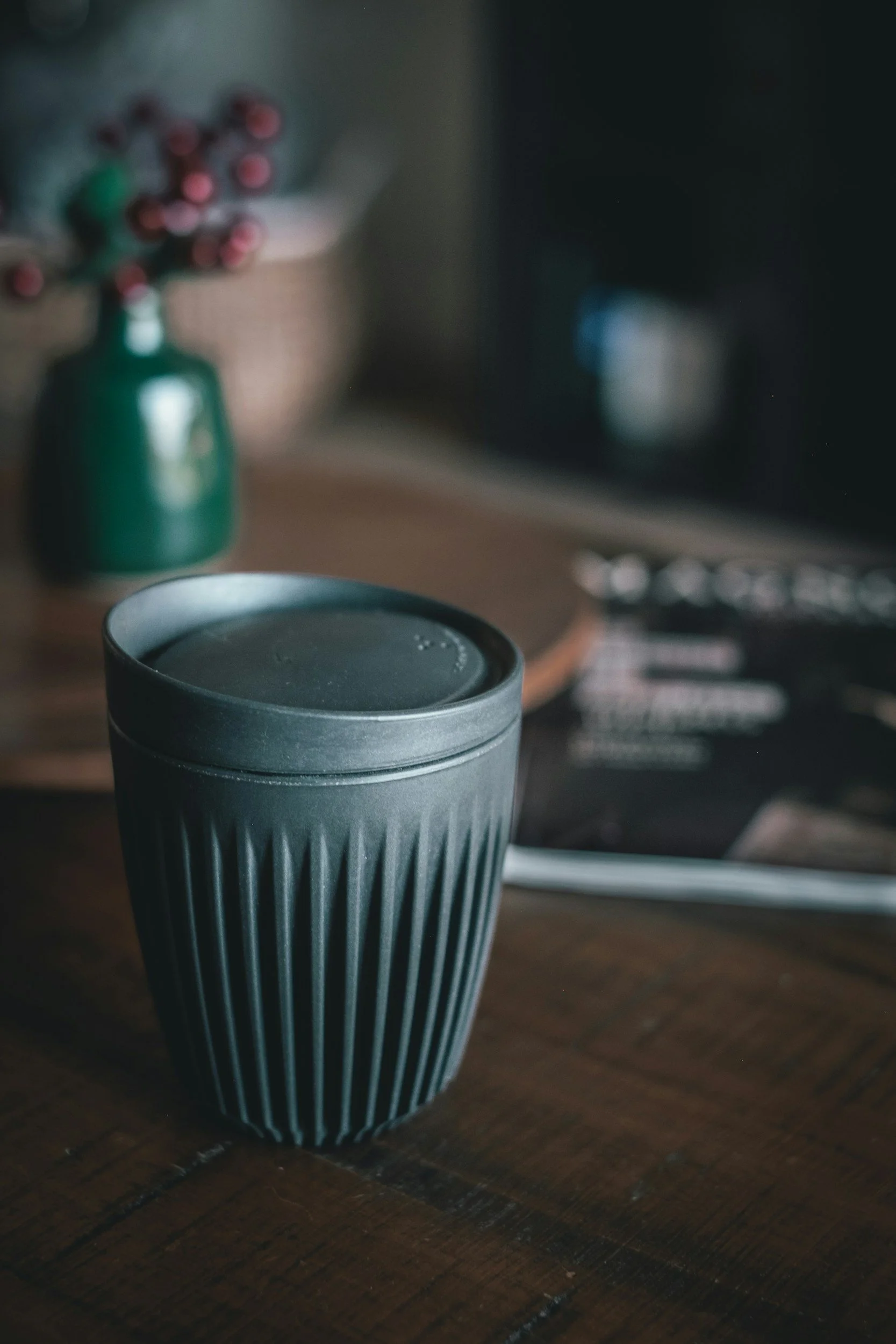
What to Look for When Buying a Reusable Cup
Material: Stainless steel or glass are the best options for avoiding chemical leaching. Ceramic is excellent for home or office use. If choosing plastic, ensure it's BPA-free.
Insulation: A double-walled insulated cup keeps coffee hotter for longer — essential for Australian winters and commutes.
Size: Match your usual coffee order. 8oz suits a standard flat white or latte; 12oz suits a larger drink.
Lid design: A secure, easy-to-use lid that doesn't leak in a bag is essential. Look for one that's easy to clean, with no hard-to-reach grooves where coffee residue can accumulate.
Australian-made options: KeepCup (Melbourne) and Frank Green (Melbourne) are both Australian-designed brands with strong reputations for quality and sustainability. Buying Australian also means lower carbon miles.
Benefits of switching
We really hope we are preaching to the converted here, and you already have a reuseable cup, you just need to dig it out of the cupboard! If not, the financial case for a reusable cup is one of the most straightforward in the whole plastic-free movement.
Financial benefits
The Responsible Cafés network — a growing movement of Australian cafés committed to sustainability — connects customers with cafés offering discounts of 20 to 50 cents per coffee when you bring your own cup. Some cafés offer up to $1 off. If you buy one coffee a day at a 50-cent discount, that's a saving of $182.50 per year. A quality reusable cup costs $20–50. It pays for itself within weeks.
In 2024, a YouGov survey of 1,046 Australians found that 51% of Australians said they actively carry a reusable cup or bottle to reduce plastic waste in their daily routine. The habit is already mainstream — and the savings are real.
Health benefits
Switching to a reusable cup — particularly one made from stainless steel, glass, or ceramic — eliminates your daily exposure to microplastics from disposable cup linings. Reusable cups made from quality materials are free from BPA, phthalates, and the other chemicals associated with plastic food and drink contact. They're also non-porous, making them easier to clean thoroughly and less likely to harbour bacteria than plastic alternatives.
Heat benefits
A good insulated stainless steel reusable cup keeps coffee significantly hotter for longer than a disposable cup. If you've ever been frustrated by a takeaway coffee that's lukewarm before you've finished it, a quality insulated cup solves the problem entirely.
Environmental advantages
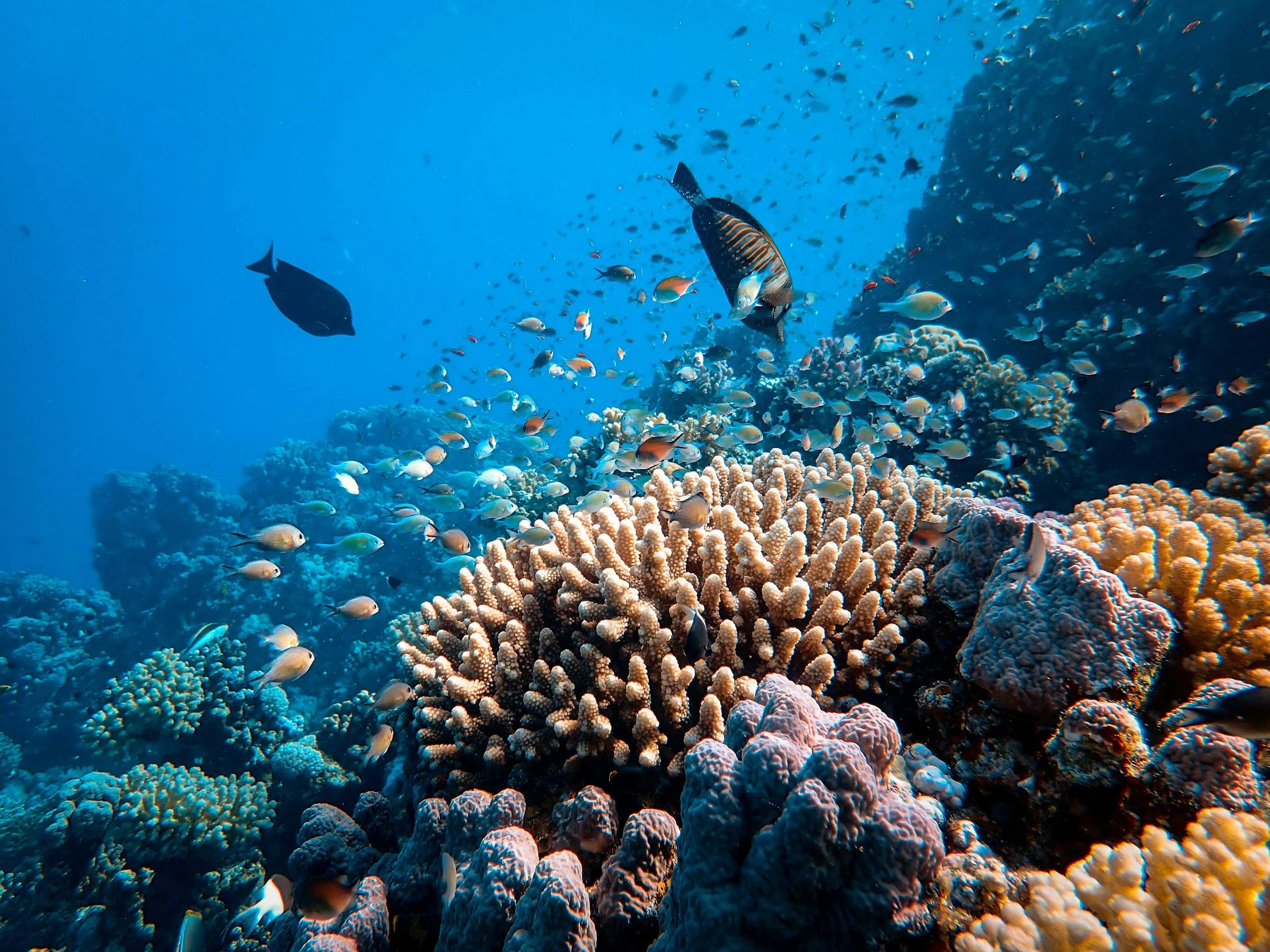
Of the estimated 1.5–2 billion cups thrown away annually in Australia, a significant proportion ends up littered and finds its way into stormwater drains, rivers, and ultimately the ocean. Once in the ocean, the plastic lining breaks down into microplastics that enter the food chain, affecting marine life from seabirds to fish to the seafood on our plates.
WWF-Australia and the Plastic Free Foundation have calculated that reducing Australia's disposable cup consumption by just half a billion cups per year — less than a 30% reduction — would deliver estimated savings of $104 million in single-use cup costs and significant reductions in environmental damage.
According to the University of Melbourne's sustainability team, over a year, the use of a reusable cup reduces greenhouse gas emissions by up to 92 per cent compared to disposable cups. Australian-designed and manufactured KeepCup — one of the most recognised reusable cup brands in the world, founded in Melbourne — is a standout example of local innovation addressing a local problem.
The Australian-designed Good Reusables system, which helped the NSW town of Bermagui become single-use cup free in 2024, estimates each reusable cup saves 18.4 kg of carbon emissions over its lifetime, reduces plastic by 1.6 kg, and conserves over 330 litres of water.
The momentum at a policy level is clear. Western Australia and South Australia have introduced laws restricting single-use plastic-lined coffee cups, and other states are following. The 2025 National Packaging Targets are under review, and WWF-Australia has advocated for a mandatory plastic waste reduction target. The direction of travel is toward fewer disposable cups — making the switch to reusable now a choice that will become increasingly mainstream.
Practical tips: Making the habit stick
The most common reason people don't use their reusable cup is simply that they forget it. Here are practical strategies to make the habit automatic:
Choose a cup you actually love. A cup that feels good to hold, keeps coffee at the right temperature, and fits your café order is one you'll actually use. Melbourne-born KeepCup offers a wide range of sizes and materials. Frank Green, also Australian-designed, is a popular premium option known for its smart lid system and beautiful colours.
Keep one everywhere you need coffee. The most effective strategy is to have a reusable cup wherever you're likely to want coffee — one at work, one in the car, one in your bag. You can't forget it if it's already there.
Use the Responsible Cafés app to find cafés near you that offer BYO cup discounts. In Melbourne especially, the vast majority of independent cafés are on board — ask your regular barista if they offer a discount. Most do.
Choose the right size. Most cafés make standard coffees in 8oz or 12oz. Make sure your cup matches what you usually order, or your barista may need to adjust the recipe. Most reusable cup brands clearly state their capacity.
Wash it properly. Hand-wash with hot water and detergent after every use. Always hand your cup to the barista clean and dry. Many quality reusable cups are also dishwasher safe — check the manufacturer's instructions.
Recommended products…
Decostatue - 2 Pack Glass Coffee Tumbler with Silicone Lids
12oz Reusable Double Walled Glass Coffee Cups with BPA free silicone Lids.
The high - quality glass used in these cups can withstand rapid temperature changes. Pour boiling hot coffee directly without worrying about the glass cracking, ensuring long - term use.
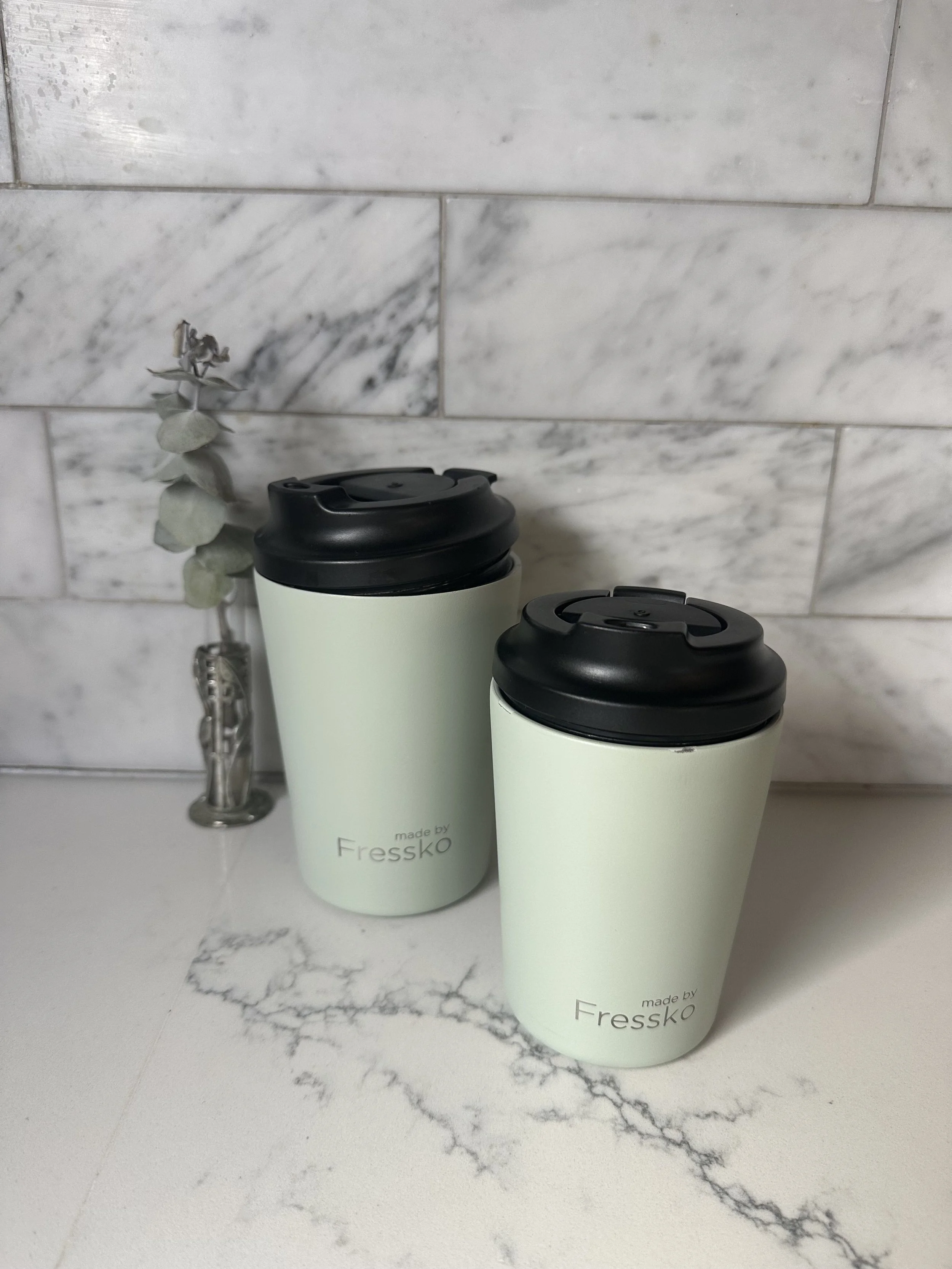
Fressko Bino Cup - Reusable Coffee Cup (227ml)
Our favourite for years! We have one each and use them all the time. But we know technically they aren’t plastic free. Ours are ceramic lined, but have a plastic lid. We are still searching for good alternatives.
Double-Wall Insulated Stainless Steel Travel Mug - BPA-Free - the safer alternative to plastic, Leak-Proof Cup with Lid for Hot Drinks, Iced Coffee & Cold Brew. My favourite is Sage (Green) but they have loads of other colours to choose from.
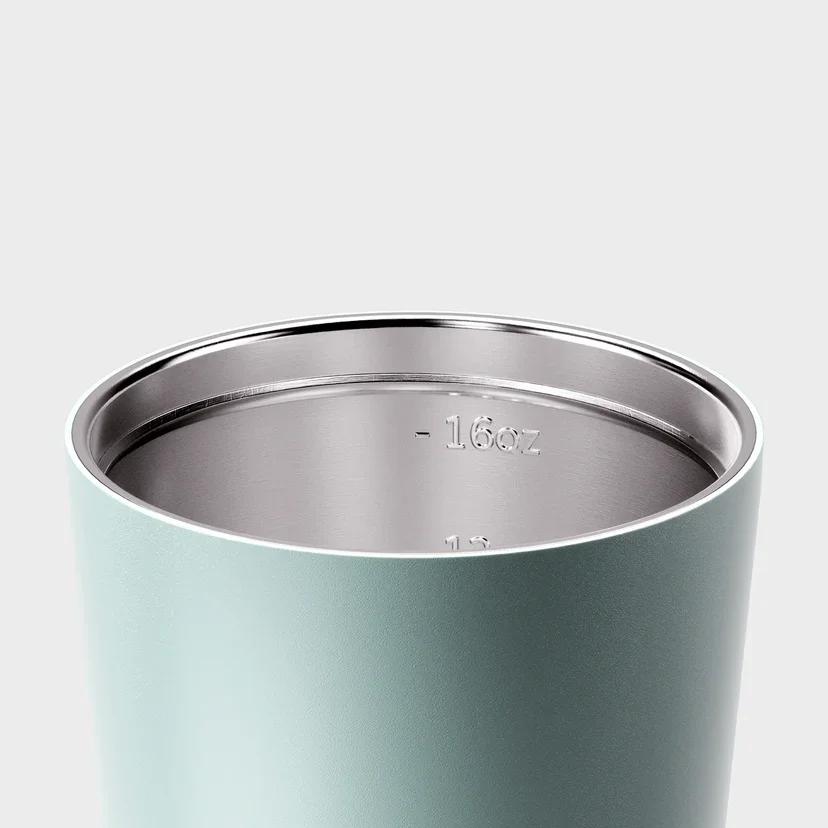
Fressko Grande Cup - Reusable Coffee Cup (475ml)
If you like a large latte or very long - long black, this may be more your size.
Double-Wall Insulated Stainless Steel Travel Mug - BPA-Free, Leak-Proof Cup with Lid for Hot Drinks, Iced Coffee & Cold Brew - Again sage green is shown here, but there are loads of other colours to choose from.
We want to be transparent about where our facts and data have come from. In a world of ‘fake news’ and AI, its good to be clear about information, so that you can trust it.
Our sources
Average Australian coffee cup waste figures - Australian Plastics Flows and Fates Study (DCCEEW)
Number of single-use cups used annually - Clean Up Australia
WWF-Australia and Plastic Free Foundation - Disposable Coffee Cups Policy Briefing (2022)
KeepCup reduces greenhouse gas emissions - University of Melbourne Sustainability
Carbon, water, and plastic savings per reusable cup - Good Reusables (Australia)
BYO cup discount network - 2024 YouGov survey data, Responsible Cafés Australia
World's 100 Best Coffee Shops 2025 - CNN (Toby's Estate and Proud Mary featured)
Reusable cup carbon breakeven at 40–50 uses - Hampton Coffee Company
Green Caffeen cup swap scheme - Inner West Council NSW
NSW EPA — Morning Glory Café reusable cup case study (2024)
Microplastic particles ingested - 2025 review published in the Journal of Hazardous Materials.