
What are the best reusable water bottles available in Australia in 2026? Which one is right for you?
Australians spend more than $500 million on bottled water every year. But with tap water available essentially for free, and some excellent reusable bottles now on the market, switching to a reusable bottle is one of the simplest, most impactful plastic-reducing swaps you can make.
Frank Green vs Hydro Flask vs Klean Kanteen vs KeepCup. Here's everything you need to know before you buy — including an honest answer to the question: are these bottles actually plastic free?
We already know that single-use plastic bottles are bad for the environment. But the financial and health case for switching is just as compelling.
A 2024 Columbia University study found that one litre of bottled water contains an average of 240,000 plastic fragments — 90% of which are nanoplastics invisible to the naked eye. Those particles go straight into your body with every sip. A quality stainless steel or glass bottle massively reduces that exposure.
And the environmental maths stacks up too. A reusable bottle refilled twice daily and washed weekly can save roughly 200 kilograms of CO₂ over its lifetime compared to buying bottled water.
An Honest Note: Are These Bottles Actually Plastic Free?
Let's address something most bottle comparison posts quietly skip over.
The honest answer is: most reusable water bottles are not fully plastic free. The body of a stainless steel or glass bottle contains no plastic — and that's where your water actually sits — but lids, seals, gaskets, and straws on the majority of popular bottles do contain some BPA-free plastic or food-grade silicone components.
Frank Green lids and straws are made from BPA-free plastic and silicone. Hydro Flask lids contain plastic and rubber gaskets. Klean Kanteen's standard range has plastic lid components. YETI uses plastic and rubber in its cap. Even the KeepCup Brew, reviewed here as the most plastic-minimal option, typically has a plastic lid.
We have found one - the Klean Kanteen Reflect — made exclusively from recycled stainless steel, sustainably harvested bamboo, and food-grade silicone. So if a completely plastic-free bottle is your priority, this is the one to choose.
For the other bottles reviewed here, the accurate claims are: the water-contact surface is plastic free, they are all BPA-free. They can all help in a genuine reduction in plastic exposure — but it's not the same as being completely plastic free, and we want to be completely clear on that - as our website is for plastic free products.
What to look for before you buy
Material — Stainless steel (18/8 food grade) is the gold standard. It's durable, non-toxic, doesn't leach chemicals. Ceramic coatings are great, and won't affect the taste of your water. Glass is also excellent but heavier and more fragile.
Insulation — Double or triple-wall vacuum insulation keeps drinks cold for hours in the Australian summer. If you're at the gym, or outdoors, this matters a lot. Single-wall bottles are lighter and cheaper but won't keep drinks cool.
Lid type — Straw lids, push-button lids, screw caps, and flip tops all suit different uses. Straw lids are great for the gym or driving; screw caps offer the best insulation performance; push-button lids are convenient but have more parts to clean.
Size — Match your actual habits. A 500ml bottle suits most desk workers. A 1 litre bottle suits gym-goers, hikers, and parents supervising kids in the heat.
Ease of cleaning — Wide-mouth openings are significantly easier to clean thoroughly. Look for bottles where parts are dishwasher safe, or easy to hand wash.
Price vs. longevity — Spending $50–80 on something that lasts a decade is better value than buying a $20 bottle that needs replacing every couple of years.
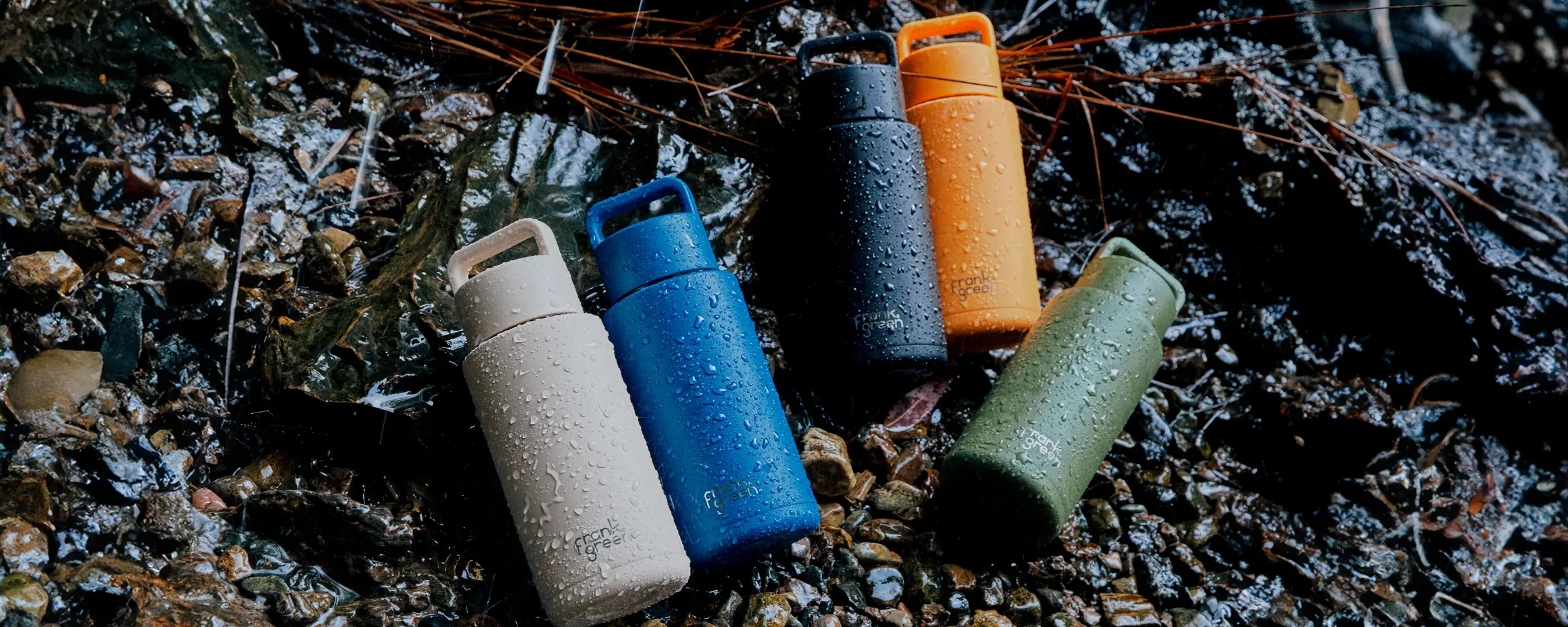
The Bottles: Head-to-Head
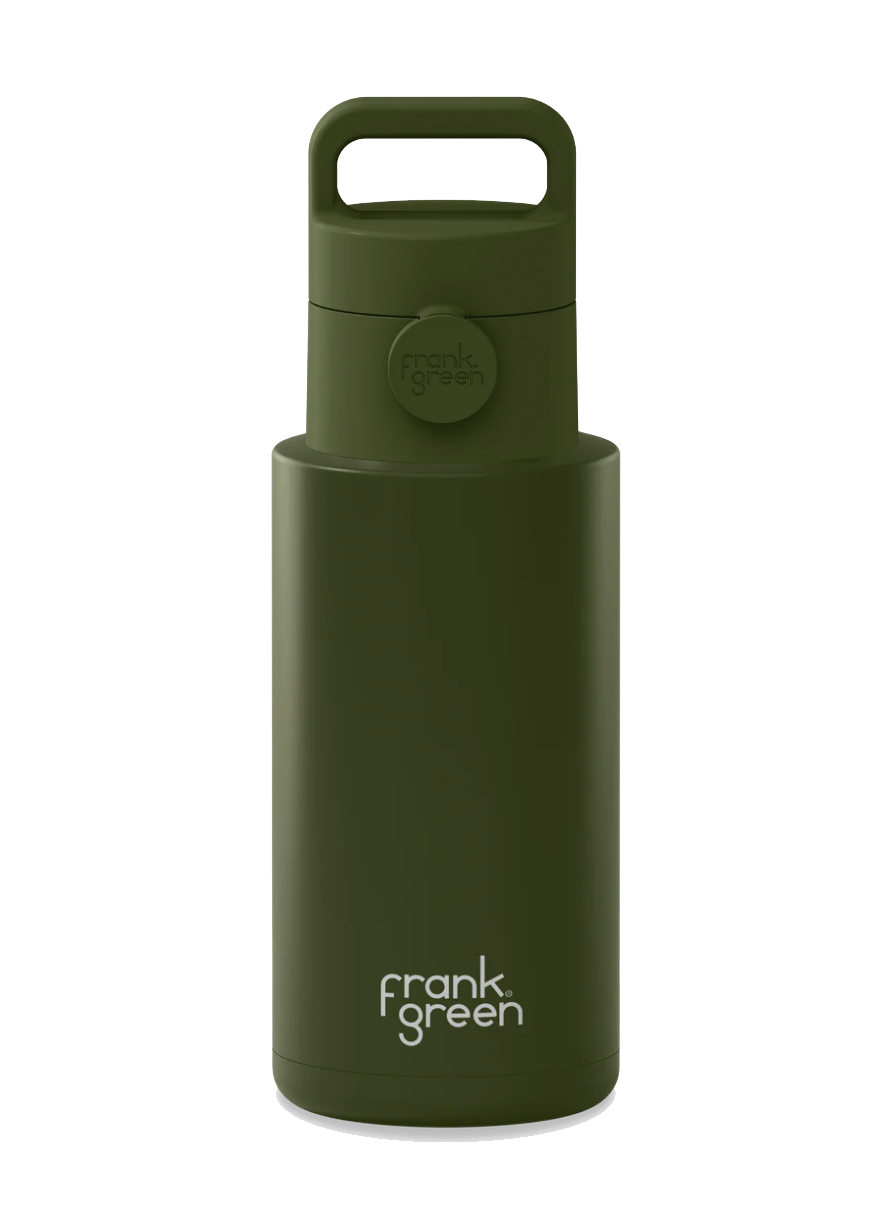
Frank Green
Best for Style and Everyday Aussie Use
Price: ~$60–80 AUD | Sizes: 595ml, 1 litre
Material: Stainless steel with ceramic inner lining
Made in: Melbourne, Australia
Founded in Melbourne, Frank Green is still Australian-owned, so perfect if you want to support local. The brand's ceramic inner lining is a genuine point of difference — it means your water never touches metal or plastic, eliminating any metallic taste entirely.
The triple-wall vacuum insulation keeps drinks cold for hours, and the push-button lid is one of the most convenient designs on the market — genuinely one-handed operation.
The range of colours and the option to monogram or mix and match lids and straps has made it something of a lifestyle accessory, and the brand's responsiveness to customer feedback (they launched a cupholder adaptor after fans improvised with plumbing pipe) shows real community connection.
Best for: Style-conscious Australians, office use, those who hate a metallic taste, anyone who wants to support a local brand.
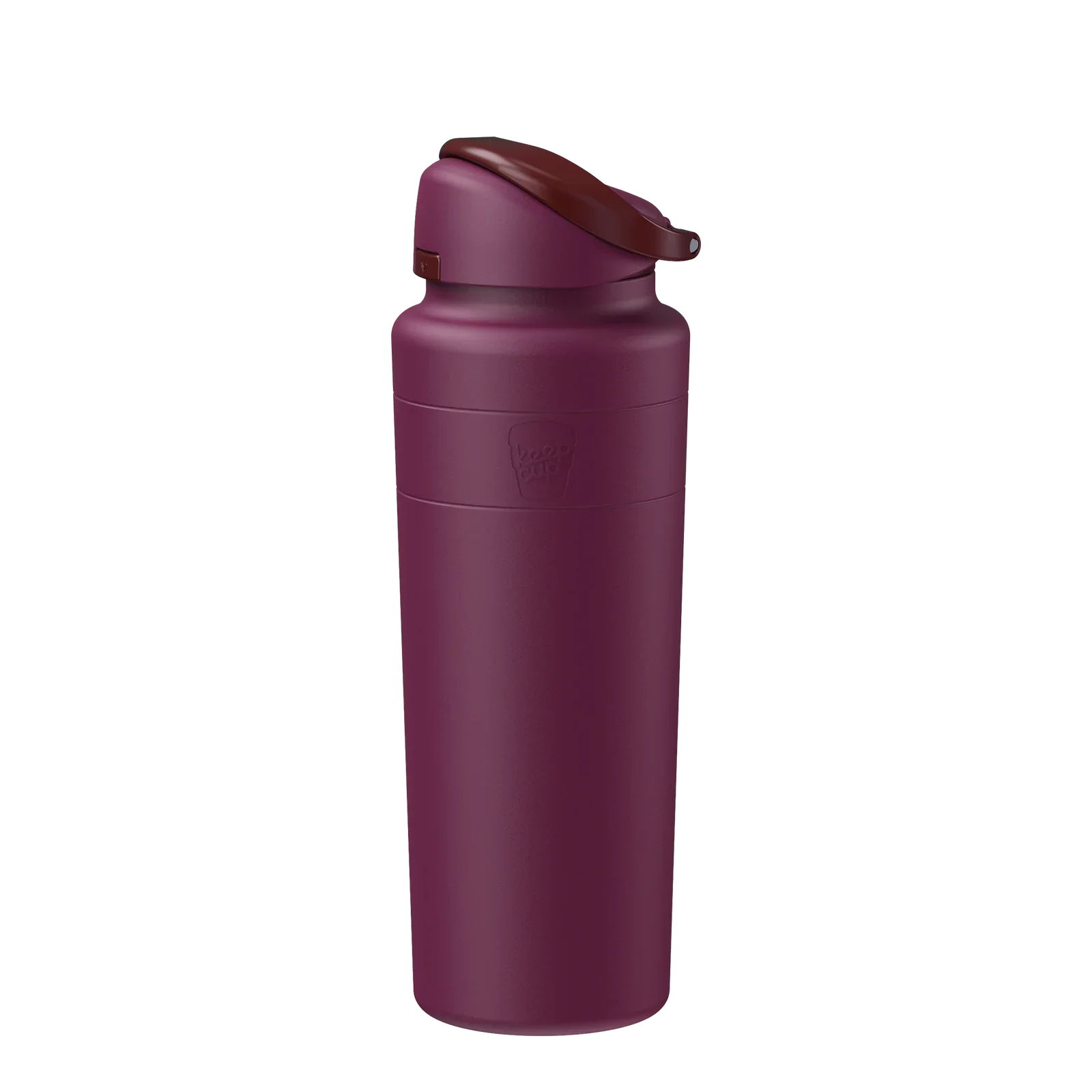
KeepCup Ora
Brand New Option
Price: ~$60 - 70 AUD | Sizes: 700ml, 950ml
Material: 8/8 vacuum-insulated electropolished stainless steel bottle and straw, Tritan lid, silicone gasket
Made in: Melbourne, Australia
KeepCup is best known as the original reusable coffee cup — also Melbourne-born — but their new range of reusable bottles (launched April 2026) deserves attention as a low-plastic option.
They are made from 90% recycled stainless steel, lead-free,
BPA and phthalate-free. It has a push-button lid for quick, one-handed opening. Easy to use when you’re walking, driving, or mid-workout.
Double-wall vacuum insulation keeps drinks cold for hours. The dual-function lid lets you choose how you drink. Use the built-in straw for easy sipping, or remove it for a faster, chug-style flow.
Best for: Office use, gym use, match to your keepcup, Being ahead of the pack/talk of the office (as the bottle style just launched).
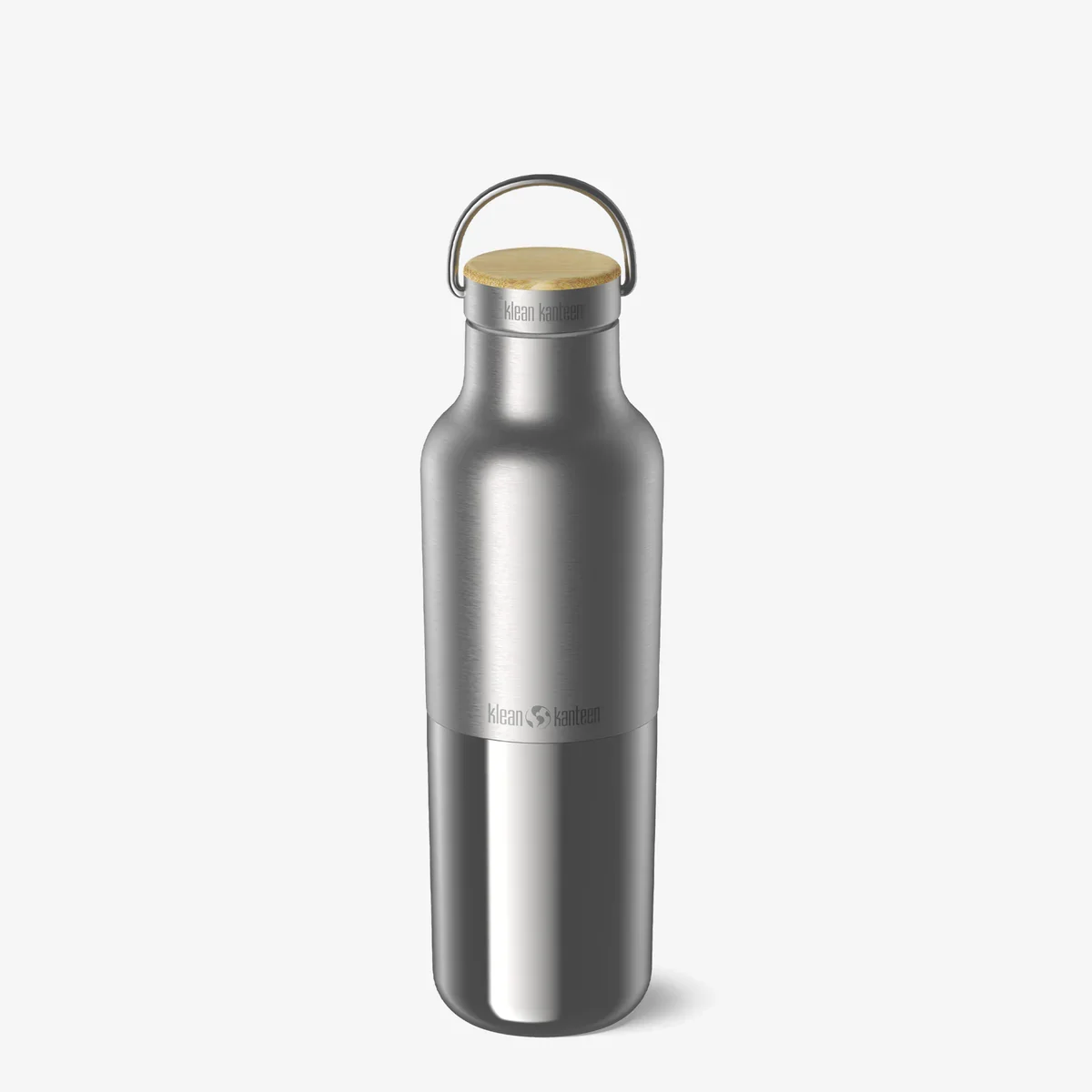
Klean Kanteen Reflect
The Genuinely Plastic-Free Option
Price: ~$50–65 AUD | Sizes: 800ml
Material: Recycled stainless steel, bamboo, food-grade silicone
Made in: USA (Climate Neutral Certified)
If a truly plastic-free bottle is what you're after, this is the only one on this list that legitimately earns that description. The Klean Kanteen Reflect is made from just three materials: certified 90% post-consumer recycled stainless steel, sustainably harvested bamboo for the cap, and food-grade silicone. No paint. No plastic. Anywhere.
It's a single-wall bottle, so it won't keep drinks cold for extended periods the way a vacuum-insulated bottle will — but for those committed to eliminating plastic contact entirely, the Reflect is the most honest choice available at a reasonable price point.
Best for: Anyone who wants complete confidence that no plastic touches their water at any point.
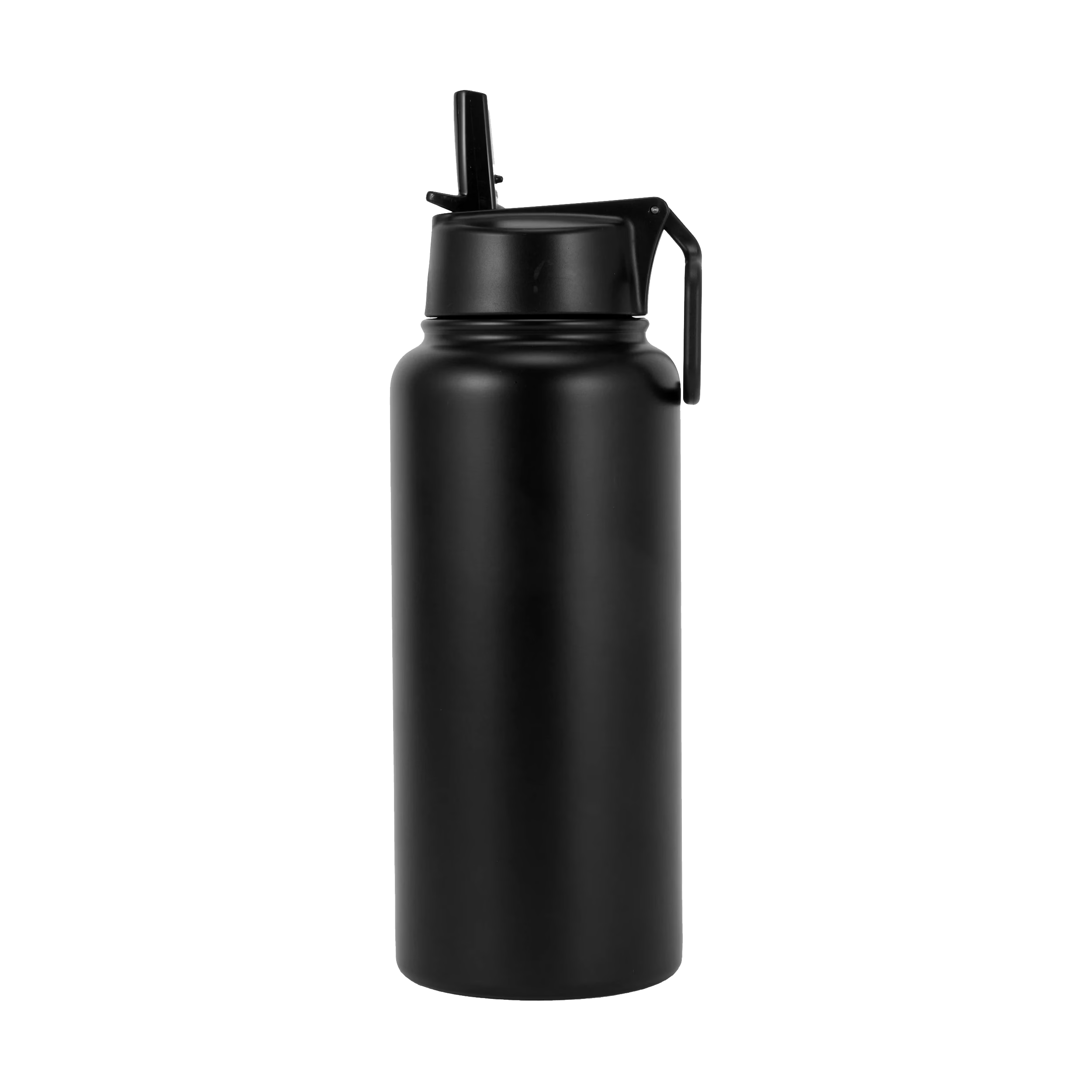
Kmart Double Wall bottle
Best Budget-Friendly Option
Price: ~$14- 18 AUD | Sizes: 960ml
Material: Stainless steel, Polypropylene lid and straw, silicone cover ring |. Made in: Not clear
The Kmart metal water bottle is more budget friendly, and the double wall we found kept ice for longer than the Frank Green bottle when we compared.
But, it has not lasted as long. We’ve had one each for two years and the paintwork is chipping and rust appearing around the neck.
Worth a mention though, as it was our favourite for quite some time and a good price if you want a low cost start.
Best for: Budget-conscious buyers, a good entry point to trial a reusable bottle.
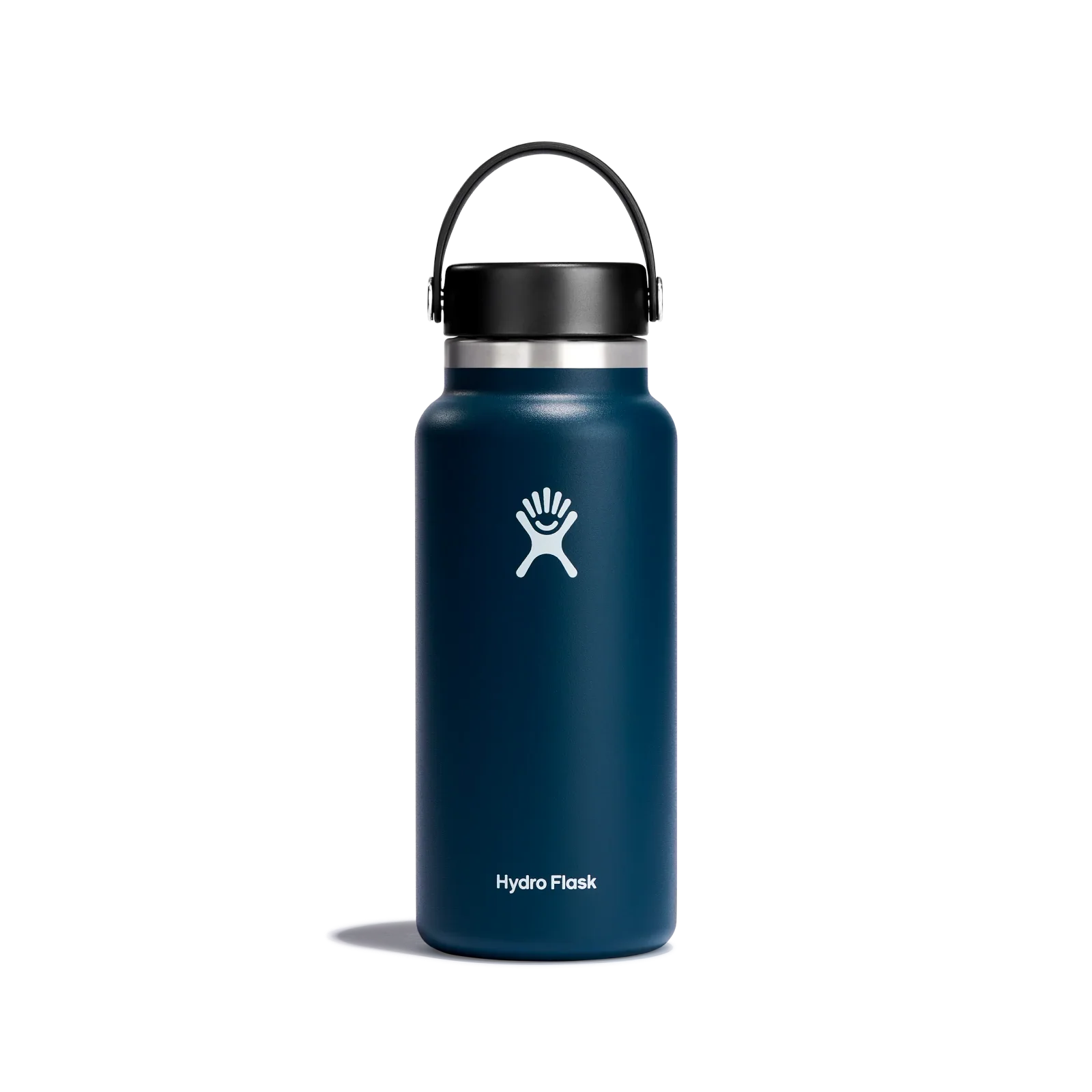
Hydro Flask
Best Overall Insulation Performance
Price: ~$60–90 AUD | Sizes: 355ml to 2 litres
Material: 18/8 pro-grade stainless steel
Made in: USA
The Hydro Flask water bottle is the best insulated bottle for most people due to its leakproof closure, ergonomic design, and effective insulation. Its TempShield technology keeps drinks cold for up to 24 hours and hot for up to 12 — genuinely impressive performance tested consistently across independent reviews.
Hydro Flask comes with a lifetime warranty, offers an enormous range of sizes (from 200ml to 2 litres), and has a wide variety of lid options. The wide-mouth design makes it easy to add ice and easy to clean. It's slightly heavier than some competitors, but that weight reflects solid, durable construction.
Hydro Flask guarantees its bottles will stand the test of time, won't give way to condensation, and will stay cold for up to 24 hours — which is always a good thing in an Australian summer.
Best for: Outdoor use, hiking, beach days, gym sessions, anyone who needs serious cold retention in Australian heat, travellers.
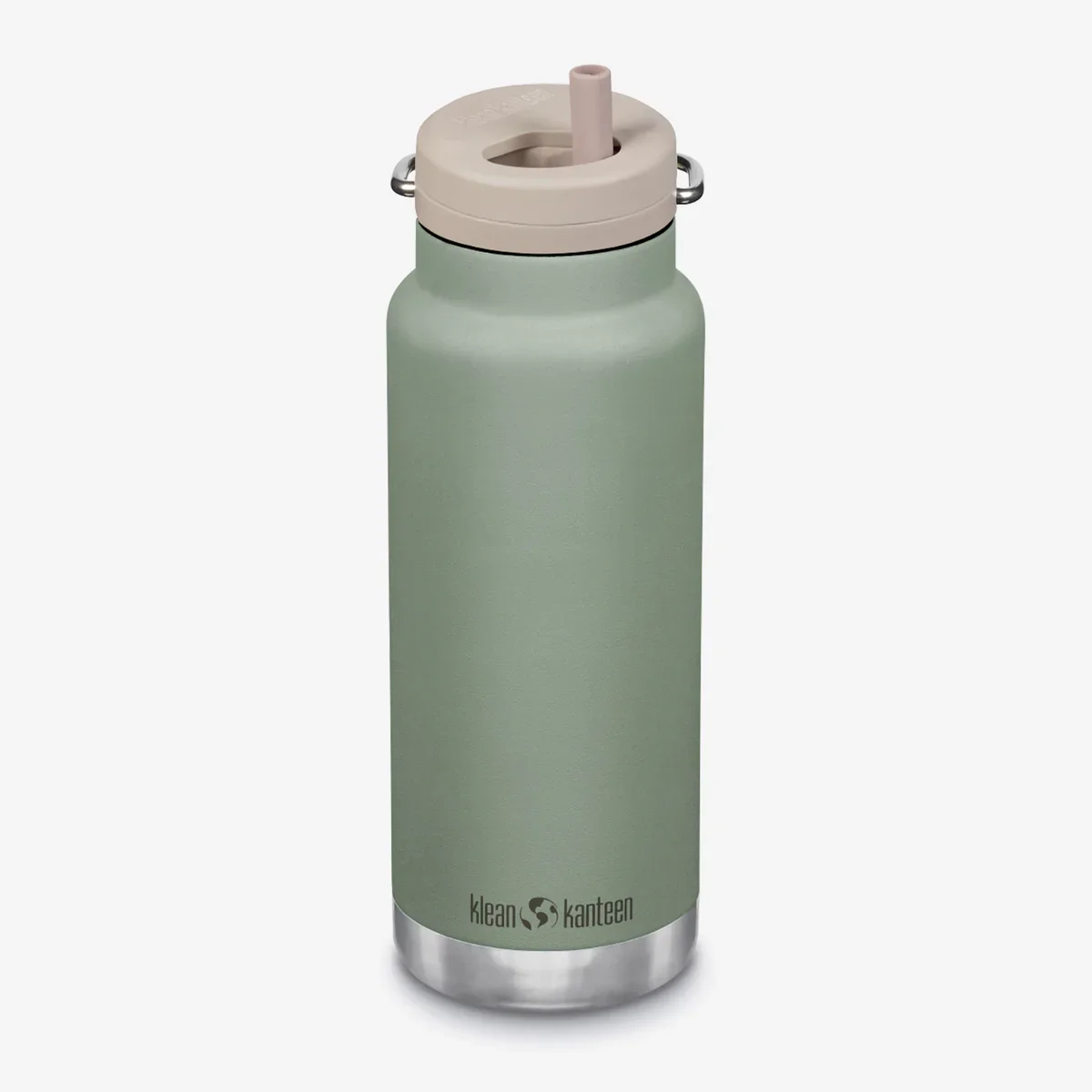
Klean Kanteen
Best for Eco Credentials and Value
Price: ~$45–70 AUD | Sizes: 355ml to 1.9 litres
Material: 90% post-consumer recycled 18/8 stainless steel Made in: USA (Climate Neutral Certified)
Klean Kanteen is a leader in eco-friendly hydration. They use recycled food-grade stainless steel, and all their paints are chip-resistant and non-toxic. The brand is Climate Neutral Certified.
For the environmentally motivated buyer, Klean Kanteen's bottle has a lower production footprint than many competitors. Independent testing has found their insulation rivals Hydro Flask, at a slightly lower price point. The lid design features internal threads (bumps rather than grooves) that make it easier to clean thoroughly — a small but genuinely useful detail for anyone fastidious about hygiene.
The Klean Kanteen TKWide Recycled Insulated is loved for its eco-friendly construction that features a metal rather than a plastic straw for improved taste throughout the day.
Best for: Eco-conscious buyers who want the full package — recycled materials, climate certification, and excellent performance. Also great for kids (simple, sturdy, no fussy parts).
Practical tips for prolonging the life of your bottle
Whatever bottle you choose, clean it properly. Reusable bottles that aren't cleaned regularly become a breeding ground for bacteria — particularly if you use them for anything other than water.
Wash your bottle daily with hot soapy water, and do a thorough clean of all parts (including straws and lids) at least weekly.
Most stainless steel bottles are dishwasher safe on the top rack, though hand washing extends the life of powder coatings.
We want to be transparent about where our facts and data have come from. In a world of ‘fake news’ and AI, its good to be clear about information, so that you can trust it.
Our sources
Best Water Bottles 2026 - CHOICE Australia, Broadsheet Australia, Outdoor Gear Lab, Bottles Pure
The True Cost of Single-Use Plastic Bottles - DrinkBottles.com.au
Nanoplastics in bottled water study - Columbia University / PNAS (2024)
Reusable Water Bottles Save More Than Money - Aquafil Australia
Research commissioned by the WWF and the Plastic Free Foundation shows that 85% of Australians want to reduce their use of disposable plastics. The desire is there. What most of us need is a clear, manageable starting point.
Your home is the best place to begin. Not because individual action solves everything — it doesn't, and policy change matters enormously — but because the home is where you have the most control, where the health benefits are most direct, and where small changes compound into meaningful habits.
Look at our other product examples and blogs for inspiration.